Sponsored by Sunnyside Med
Health › Alcohol & Wellness
People Are Quitting Alcohol With This Medication. No AA Required.
It's FDA-approved for alcohol use disorder. It's not the only path, and it's not for everyone. But it's real, and more people are choosing it every day.
For almost a century, getting sober has come down to the same formula. Meetings. A label you introduce yourself with, over and over, for the rest of your life. Willpower, expected to hold indefinitely.
That's no longer the only path, and most people have no idea it changed.
There's a medication quietly reshaping what sobriety looks like for a growing number of people. No meetings required. No permanent label. Just a prescription and a different kind of support system entirely.
It's not new. It's not experimental. It's FDA-approved, backed by three decades of research, and it's already helping people get sober right now, quietly, without anyone around them even noticing anything changed.
Almost Nobody Fits The Definition
Most people don't fit cleanly into either of these categories, fine or alcoholic, even though that's the only choice most people are ever handed.
On one end: real physical dependence. Withdrawal if you stop suddenly. A life that's genuinely come apart. For people here, real structure, often full abstinence, often a program like AA, is the safest path there is. Nothing here argues against that.
On the other end: people who drink more than they want to, but nothing has fallen apart. They're not in crisis. They just don't like the pattern.
Most people asking whether any of this applies to them are somewhere in between. Maybe meetings didn't stick. Maybe you've done a dry month, then two more, and it never actually resolved anything. Maybe you've never told a single person how much you actually think about drinking.
There's no test that tells you exactly where you land. But here's what almost nobody explains: whatever end of that spectrum you're on, there's a treatment that doesn't care which one it is. It works the same way whether the goal is never drinking again or drinking dramatically less.
What About AA?
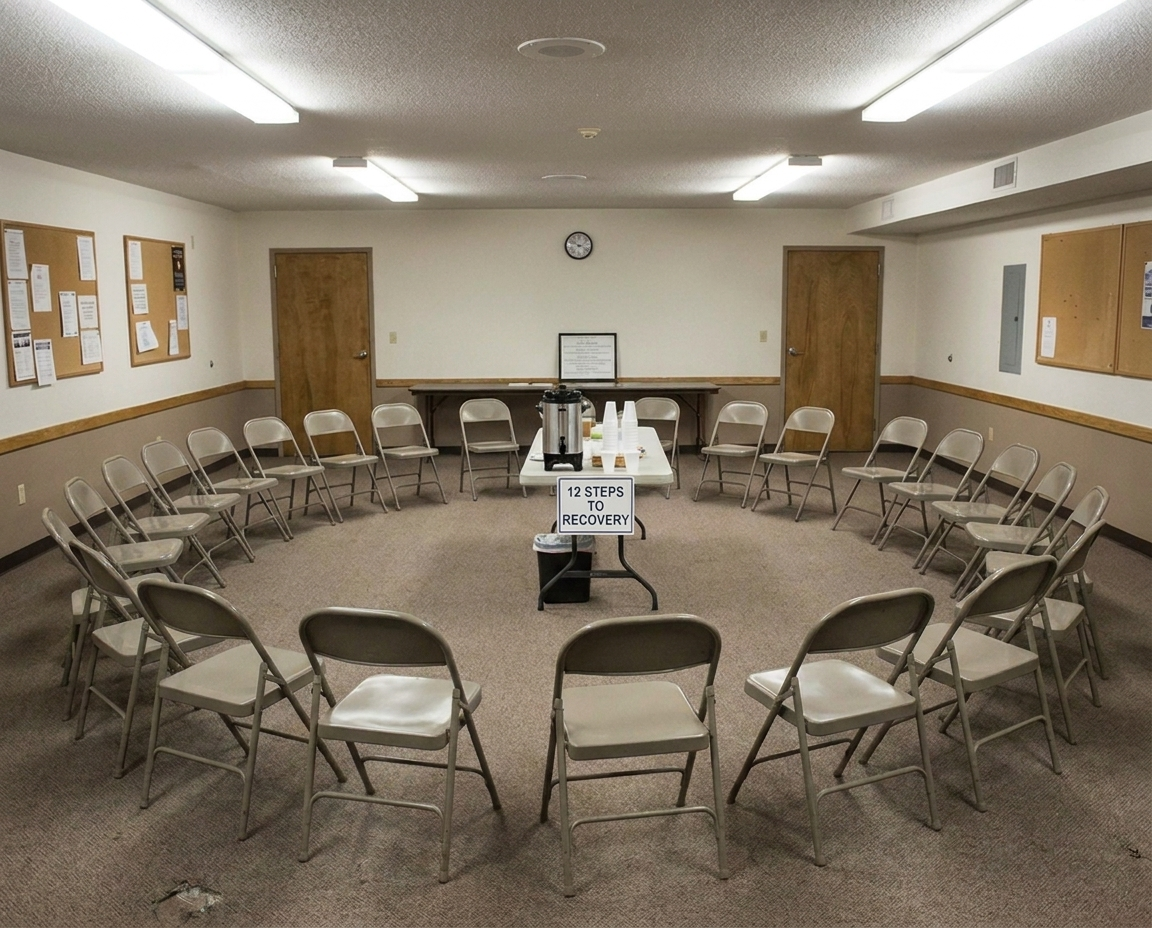
AA has kept people alive for almost a century. That's not nothing, and nothing here is trying to talk you out of it if it's working, or if you're worried it might be the only thing that will.
But it's worth being honest about why it isn't the whole answer for everyone.
For some people, the spiritual framework, a higher power, is a genuine barrier. Not because they're against getting better, but because the language and structure just doesn't fit how they think about this.
For some people, it's the identity. Standing up and introducing yourself as an alcoholic, every meeting, indefinitely, is exactly the kind of permanent label that keeps some people from ever walking through the door in the first place.
For some people, it's logistics. Regular meetings, regularly, forever, doesn't fit every schedule or every life.
And for some people, it's simply that they tried it, more than once, and it didn't stick, through no fault of their own, and they've carried that like a personal failure ever since.
None of that means AA is wrong. It means it's one path, not the only one.
There's a different kind of option. Medical, not spiritual. Private, not group-based. And it's exactly what the rest of this page is about.
The goal was never to replace a hundred years of people helping each other get sober. It's making sure that's not the only door available to someone who needs one.
How Does The Medication Work
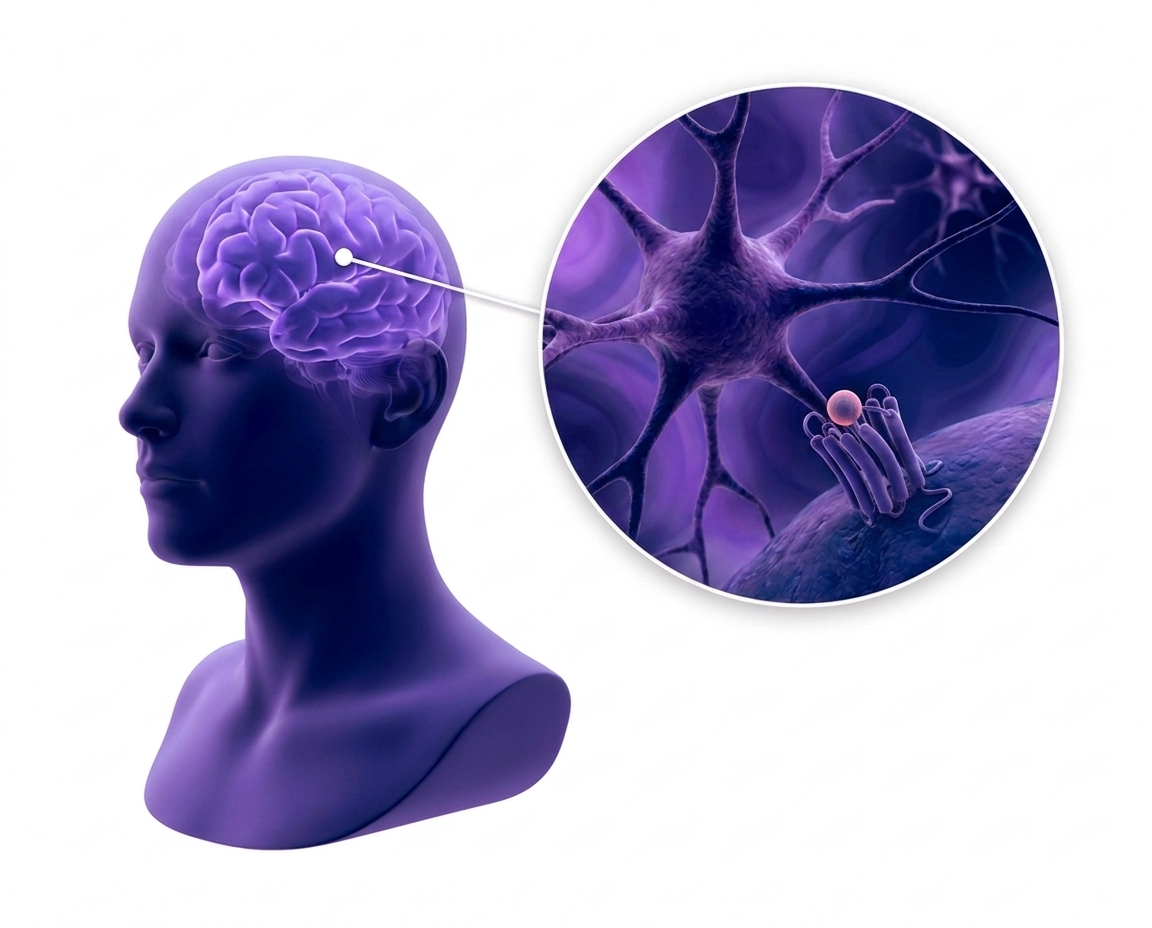
Every time you drink, your brain releases endorphins, and those endorphins hit reward receptors that make you want to keep going. It's not a character flaw. That's how your brain has learned to treat alcohol.
Step 1
You have a drink
Step 2
Your brain releases endorphins, its own natural feel-good chemicals
Step 3
Those endorphins activate brain receptors, the same ones involved in its reward system
Step 4
That activation creates the rewarding buzz that makes you want another one
“Naltrexone works by blocking the receptors in the brain that register the feelings of reward and pleasure that many feel from alcohol consumption.”
— Dr. Joseph Volpicelli, M.D., Ph.D., who led the first clinical trial of naltrexone for alcohol dependence
Naltrexone blocks that specific receptor. It's not sedation, and it's not a substitute for alcohol. It turns down how rewarding drinking feels, right at the point where the loop usually takes over.
For some people, that means the first drink stops feeling like the start of something. For others, it means the third drink stops calling as loud as it used to. Same mechanism. Different outcome, depending on what you're actually working with.
GLP-1s → Food Noise
Drugs like Ozempic became famous for quieting food noise. The constant background hum of thinking about your next meal, turned down.
Naltrexone → Alcohol Noise
Same idea, different signal. The pull toward the next drink gets quieter, so one doesn't automatically turn into three.
UCSF's Dr. Glenn-Milo Santos, speaking to National Geographic about naltrexone:
It's like an appetite suppressant for alcohol
Three Decades Of Research. Here's What The Results Show
Naltrexone is one of the most rigorously tested treatments for alcohol use in existence, and the results are stronger than most people expect.
Abstinence during treatment
Naltrexone
51%
Placebo
23%
Relapse to heavy drinking
Naltrexone
31%
Placebo
60%
Relapse in a second controlled trial
Naltrexone
21%
Placebo
41%
A separate, much larger trial called COMBINE, one of the biggest studies ever run on alcohol treatment, over 1,300 participants, found naltrexone reduced the risk of a heavy drinking day when delivered alongside structured medical support. Adding more intensive counseling on top of it didn't add extra benefit, the naltrexone plus basic medical support was enough on its own. Worth noting what "medical support" meant in that study: up to nine visits with a clinician over four months. Naltrexone was never tested as a bottle in the mail with no one on the other end. The version that worked was medication delivered inside actual care, which is how Sunnyside Med is built.
Safety has been studied just as seriously. A dedicated review pooled 89 separate randomized trials, over 11,000 participants total, specifically to check for serious adverse events across every condition naltrexone has been used for. This isn't a drug with a thin safety record still being filled in. It's one of the most closely watched.
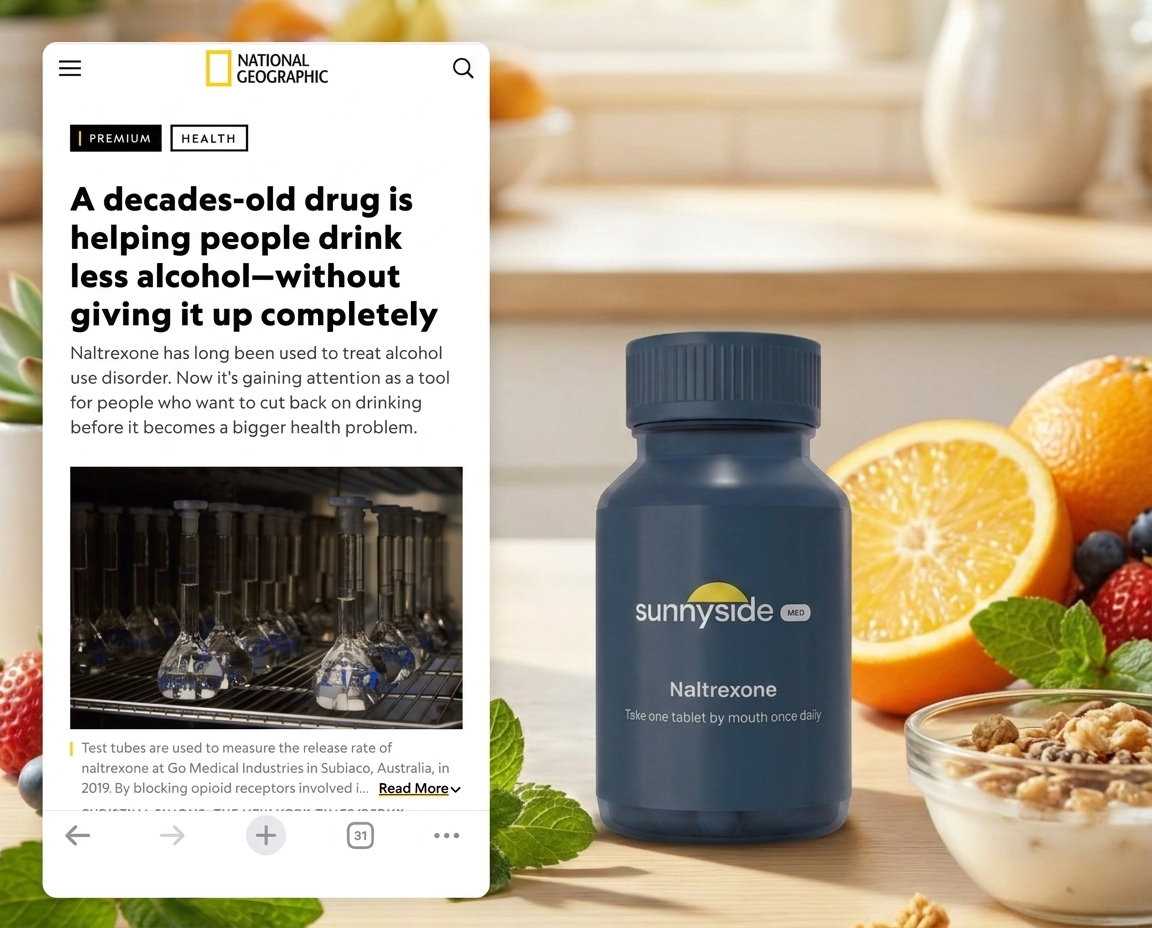
It's also gotten real, independent attention. National Geographic featured naltrexone in a December 2025 report on the medication, and mentioned Sunnyside as one example of a platform offering access to it.
Common Misconceptions About Naltrexone
Every real medication comes with real doubts. Here's what's actually true, not what sounds scary.
Myth
“Naltrexone damages your liver.”
Fact
An early warning existed, based on doses far higher than anyone takes today. Once real-world dosing was studied, the FDA removed the warning in 2013.
Myth
“This just trades one substance for another.”
Fact
Naltrexone isn't an opioid. No high, no withdrawal if you stop. It blocks a receptor, it doesn't occupy one.
Myth
“This is an unproven trend.”
Fact
Multiple independent research teams, three decades apart, keep landing on the same results. That's the opposite of a trend.
Myth
“It'll turn you into a zombie who can't feel pleasure anymore.”
Fact
It's closer to the opposite. Alcohol suppresses your body's own natural endorphins over time. Naltrexone helps that normal function return, which is why a lot of people say ordinary things, a meal, exercise, time with people they care about, start feeling good again instead of numb.
Myth
“The side effects make this not worth it.”
Fact
Most people notice mild, temporary effects, nausea or fatigue, in the first week or two, which is exactly why dosing starts low and ramps up gradually. Side effects tend to pass quickly within weeks. Serious side effects are rare.
And there's one doubt that doesn't resolve as cleanly as the others: whether something this serious deserves more than a pill. For some people, it genuinely does, medication doesn't replace community, accountability, or the human parts of recovery. What it treats is the specific chemistry driving the pull itself. The real question was never whether a pill alone is enough. It's what kind of support actually makes sense for you.
What Would the Right Kind of Support Look Like For You?
If you could build the ideal way to do this, what would it actually include?
Probably something private. No waiting room, no explaining yourself to a receptionist.
Probably something that doesn't require things to have fallen apart first. No crisis, no ultimatum, no rock bottom required to qualify for help.
Probably something that treats this as two problems, not one. The biological pull, the actual chemistry behind why stopping is hard once you've started, and the habits and patterns built up around it over years. A pill alone doesn't rebuild a routine. A routine alone doesn't turn down a craving at the source.
Probably something where a real person is there if you want one, not required, just there. Coaching you can lean on when you need it, and ignore when you don't.
Probably something where you're not doing this completely alone. A community of people going through the same thing, to share a win with, or just feel less like the only one.
Probably something that notices when things get harder, not just when things are going fine. A check-in at the right moment can matter more than a hundred at the wrong one.
And probably something that shows you it's working, not just asks you to trust it. Real tracking. Real progress you can see, not just a feeling you're supposed to take on faith.
Private. No rock bottom required. Both the biology and the behavior. Visible progress.
That's not a wish list. That's what Sunnyside Med is about.
Sunnyside Med: The Full Program
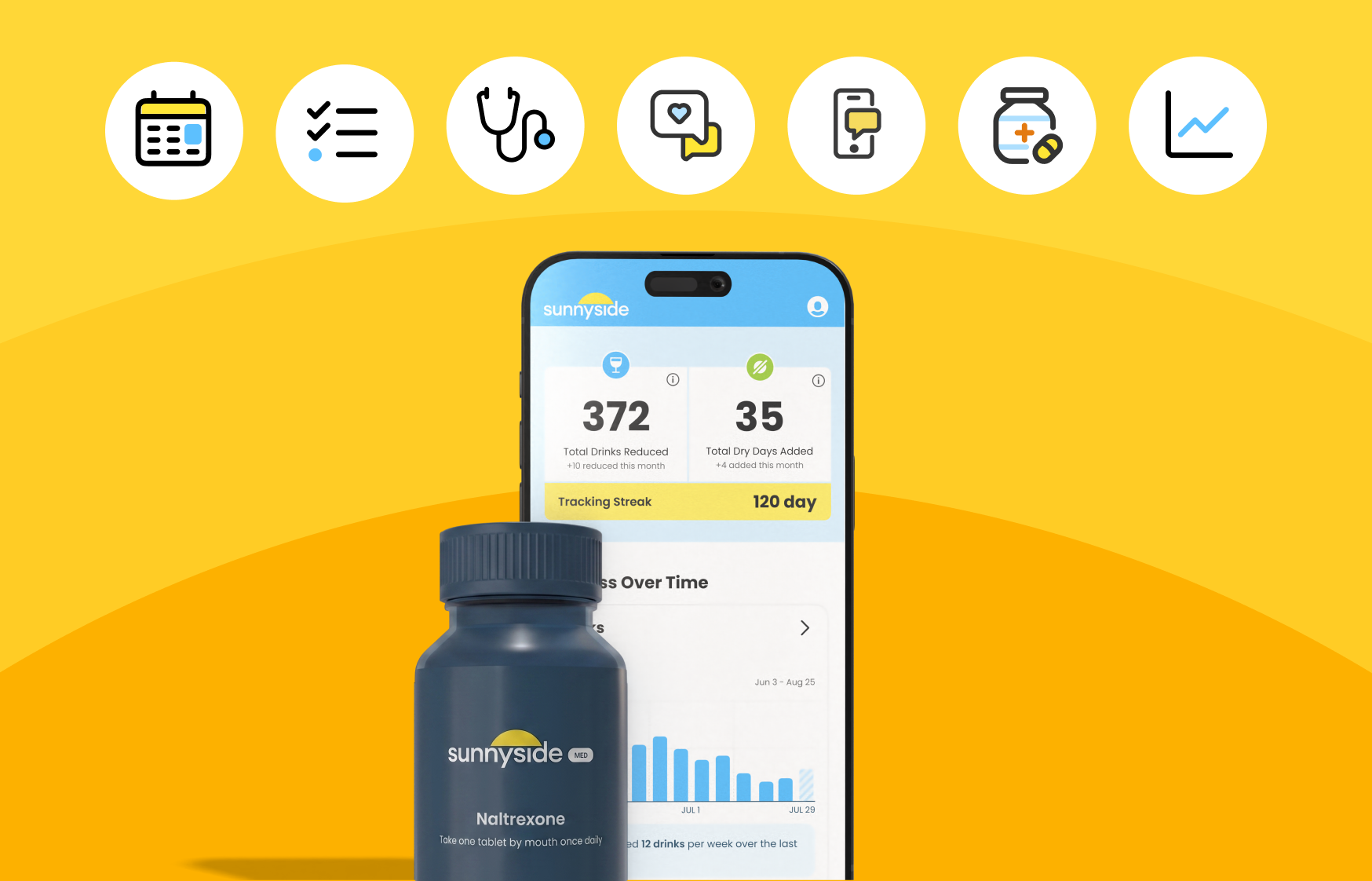
Naltrexone is the medication. It's not the whole program.
Sunnyside Med pairs compounded naltrexone with the same habit-change platform Sunnyside's been running since 2020, over 600,000 people, real coaching, daily tracking tools, and a community that's been doing this for years, not months.
Here's exactly what's included: a licensed clinician reviews your intake personally before anything ships. Once approved, compounded naltrexone ships to your door, starting at a gentler dose that ramps up gradually to reduce early side effects. Alongside it, you get the full Sunnyside app, drink tracking, weekly planning, coaching, optional meetings, text check-ins, and a real community.
of engaged Sunnyside Med members achieved meaningful reductions in drinking in just two weeks.
average reduction in drinking among members following the full program for at least 12 weeks.
The medication gets paired with a daily reminder, timed to whatever part of your day actually makes sense for you, often set an hour or two before cravings tend to show up. Consistency matters more than timing perfection, taking it at roughly the same time each day is what the research is actually built on.
The app is there when you want it. Log a quick note about how you're feeling, share it with a coach or keep it private, whichever you'd rather. Message your coach if something's on your mind. Some weeks that's a lot of activity. Some weeks it's barely anything, which is fine too.
You can join regular meetings if you want them, no pressure either way. There's also a full library of resources, an in-app podcast if you'd rather learn at your own pace, and an in-app community whenever you want to be around others working on this too.
Here's the honest part: it's not dramatic, especially at first. The effects build gradually, and a lot of people don't notice much in the first few days. That's expected, not a sign it isn't working. Consistency over the first months is what actually matters, the shift tends to be subtle and gradual rather than a single obvious moment. You can follow your progress daily within the app.
Cost is straightforward: a one-time $50 fee for the initial clinical review, then $99 a month billed quarterly, which includes three months of the app free. No insurance required, though HSA and FSA funds can typically be used toward it. Cancel anytime, no contract, refills are opt-in every three months, nothing renews without your choice.
This is a full program built around one goal, whatever your version of “better” actually looks like.
No insurance needed, cancel anytime
Reviews
From Sunnyside Med Members
Prescribed by licensed clinicians, shipped to your door
The Medical Backing

Dr. Hrishikesh Belani, M.D.
Sunnyside Medical Advisor
“I prescribe naltrexone regularly as a safe, effective way to curb heavy drinking. I highly recommend pairing it with a behavioral health program like Sunnyside.”
— Dr. Hrishikesh Belani, M.D., Sunnyside Medical Advisor
A licensed clinician reviews every Sunnyside Med application to make sure naltrexone is appropriate and safe for you before anything is prescribed.
A Therapist's Perspective
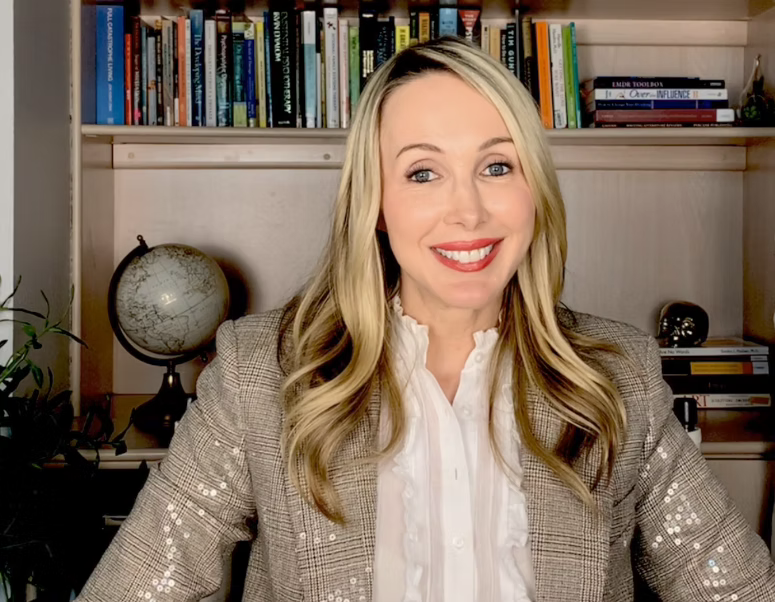
Merrilee Burke, LMFT
Licensed Marriage and Family Therapist
“When naltrexone helps reduce the cravings for alcohol, that clears the path for someone to work on any underlying psychological factors that could be influencing their drinking. Simultaneously addressing the neurological and personal aspects of someone's relationship with alcohol gives them a better chance of meeting their goals.”
— Merrilee Burke, LMFT
Why Sunnyside Was Built
Here's the story behind why this exists at all.
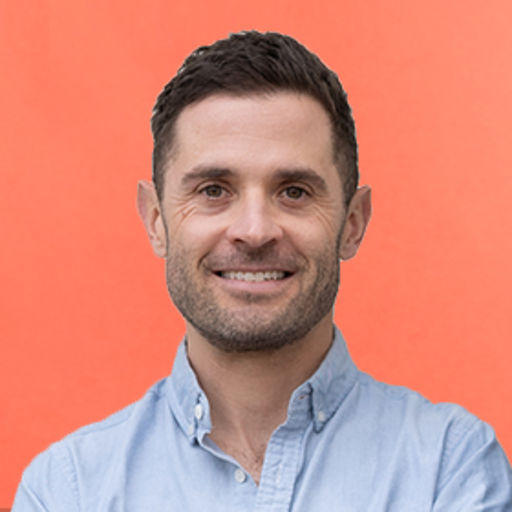
Ian Andersen
Co-Founder, Sunnyside
Ian Andersen co-founded Sunnyside after his own life was deeply affected by heavy alcohol use.
His mother passed away from alcohol related causes when he was eleven. His father found sobriety through AA. Three of his grandparents died from alcohol related issues. This isn't abstract for him. It's the reason Sunnyside exists.
Ian has taken naltrexone daily for about two years now. Not because he quit drinking, but because he wanted to change how much of a hold it had on him.
Ian's own story sits in the middle of that spectrum, not full sobriety, real reduction. It's one version of what this can look like, not the only one.
“In 2018, I took three months off drinking, and that was transformative. My drinking came down a lot at that point. But more recently, I wanted to work on the final piece, I have a hard time stopping once I start. So I started looking into naltrexone, and it's been really helpful to quiet the alcohol noise that happens during the week. If I do choose to drink, I'm just not chasing toward the next one so much anymore. I'm not perfect, and naltrexone isn't perfect, but it's been the single biggest thing that's helped me live a healthier life. I still enjoy a couple drinks a few times a month. I'm just different than I was.”
— Ian Andersen, Co-Founder, Sunnyside
FAQ
Questions People Ask
Do I have to stop drinking completely?
No. Some people use this to get fully sober. Others use it to drink significantly less. Both are valid goals, and your plan is built around which one you actually want.
Can I use this alongside AA?
Yes. Plenty of members do both. This isn't positioned as a replacement for AA, it's another option, on its own or alongside it.
Do I need to have a drinking problem to try this?
No. Sunnyside Med is built for people across the spectrum, including people who drink more than they'd like but haven't hit any kind of crisis point.
Is naltrexone safe?
A licensed clinician reviews every application before prescribing. Naltrexone isn't appropriate for people currently using opioids, taking Suboxone or buprenorphine, with significant liver disease, or who are pregnant or breastfeeding. Your provider screens for this during review.
How is this different from just trying to use willpower?
Naltrexone works at the brain level to reduce alcohol's reward response, instead of relying on willpower alone to resist a craving that's still fully there.
Are there side effects?
Naltrexone has been FDA-approved for over 30 years, so there's a lot of long-term data on it. Side effects are typically mild and temporary, usually fading within the first one to two weeks of consistent use. You may feel nauseous or lightheaded in the beginning of your journey.
How long before I notice a difference?
Most people notice something shifting after two to four weeks of daily use, cravings tend to decrease and alcohol can start to feel less rewarding. The full effect can take one to two months to show up.
What's actually included?
Compounded naltrexone, prescribed and shipped to you, plus the Sunnyside app for habit tracking, coaching, and community.
How does the process actually work?
A short online assessment, reviewed by a licensed clinician. If it's approved, your prescription ships to your door, alongside access to the app and coaching.
What does it cost, and is it covered by insurance?
There's a one-time $50 fee for the initial review by a licensed provider. After that, it's $99 a month, billed quarterly, which includes three months of the Sunnyside app free. Sunnyside Med isn't covered by insurance. If you have an HSA or FSA, you can use those funds toward Sunnyside Med, though it's worth confirming eligibility with your provider first.
What if it doesn't work for me?
Cancel anytime, no contract, directly from your account.
Wherever you are on the AUD spectrum, this is a real option worth knowing about.
A short assessment, reviewed by our clinical team